 MINDBEBOP
Mental Background OS
MINDBEBOP
Mental Background OS


Your mind wants to move.
Sometimes your attention needs somewhere to wander.
Sometimes a thought needs somewhere to be.
MindBackyard gives you space for both.
Wander through low-stimulation environments without needing to accomplish anything, or enter Thought Space and give thoughts persistent places of their own.
When a fear-based protective thought keeps getting in your way, bring its Thought Block to the Workbench.
Explore whether it offers something useful to do, look at what happened when you faced similar obstacles before, or simply give your mind some quiet space.
MindBackyard is a place for attention and thoughts when neither needs another stream of information.
You can wander through simple environments, interact with tactile visual noise, or enter Thought Space and place thoughts into a persistent 3D environment.
There are no scores, streaks, or pressure to clear everything away.
Sometimes you move. Sometimes the thought moves. Sometimes you leave it exactly where it is.
MindBackyard currently explores two different relationships with attention.
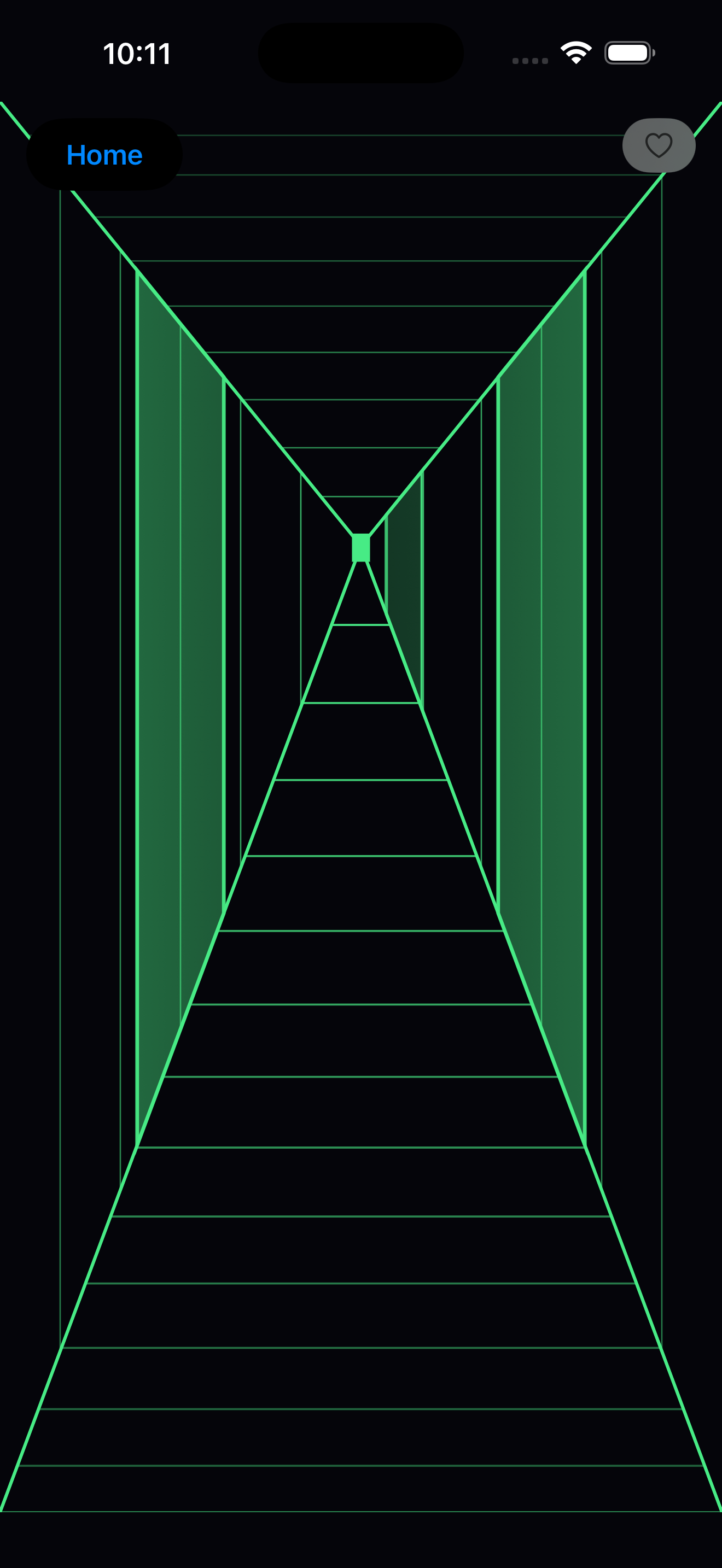
Enter environments such as Infinite Hallway and give restless attention somewhere simple to move.
There is no destination and nothing you need to accomplish.
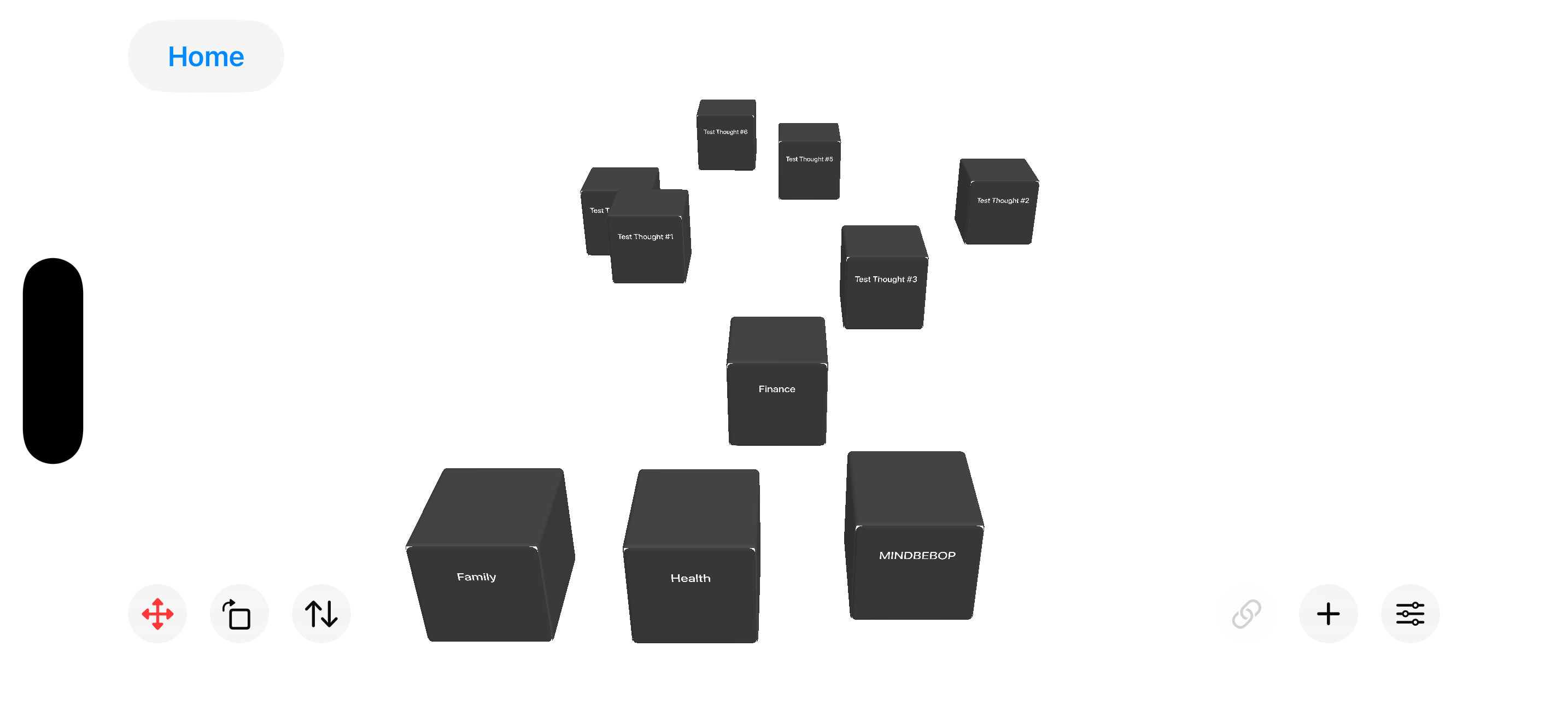
Give a thought a persistent place in 3D space.
Move it, rotate it, change its size, move closer or farther away, leave it somewhere, and return when you want.
A Thought Block does not have to become a task.
A thought can have a place
before it has a destination.
Sometimes you do not need to solve a thought.
You just do not want to keep carrying it in your immediate attention.
Thought Space lets you turn that thought into a Thought Block and give it somewhere to remain.
Thought
↓
Thought Block
↓
Give it a place in Thought Space
↓
Leave it there
↓
Return when you want
MINDBEBOP calls this Spatial Mental Shelving.
The "shelving" is not a literal shelf.
It is the act of setting a thought aside while keeping it available.
Thought Space makes that relationship spatial.
I do not need to keep thinking about this.
I know where it is.
No category is required. No priority is required. No deadline is required.
The thought can simply have a place.
The thought does not have to keep coming to you.
You can choose when to go to the thought.
Some thoughts seem to be trying to protect you.
What if you fail?
What if something goes wrong?
What if you cannot handle what happens next?
These are examples of what MINDBEBOP calls Fear-based Protective Thoughts.
They may arise when your mind anticipates something unpleasant, uncertain, or threatening.
Sometimes these thoughts point toward something useful.
Sometimes they make it difficult to move.
And sometimes you simply do not want to engage with them right now.
The Workbench in Thought Space gives you three possible ways to respond.
You do not have to fight the thought.
You can decide what to do with it.
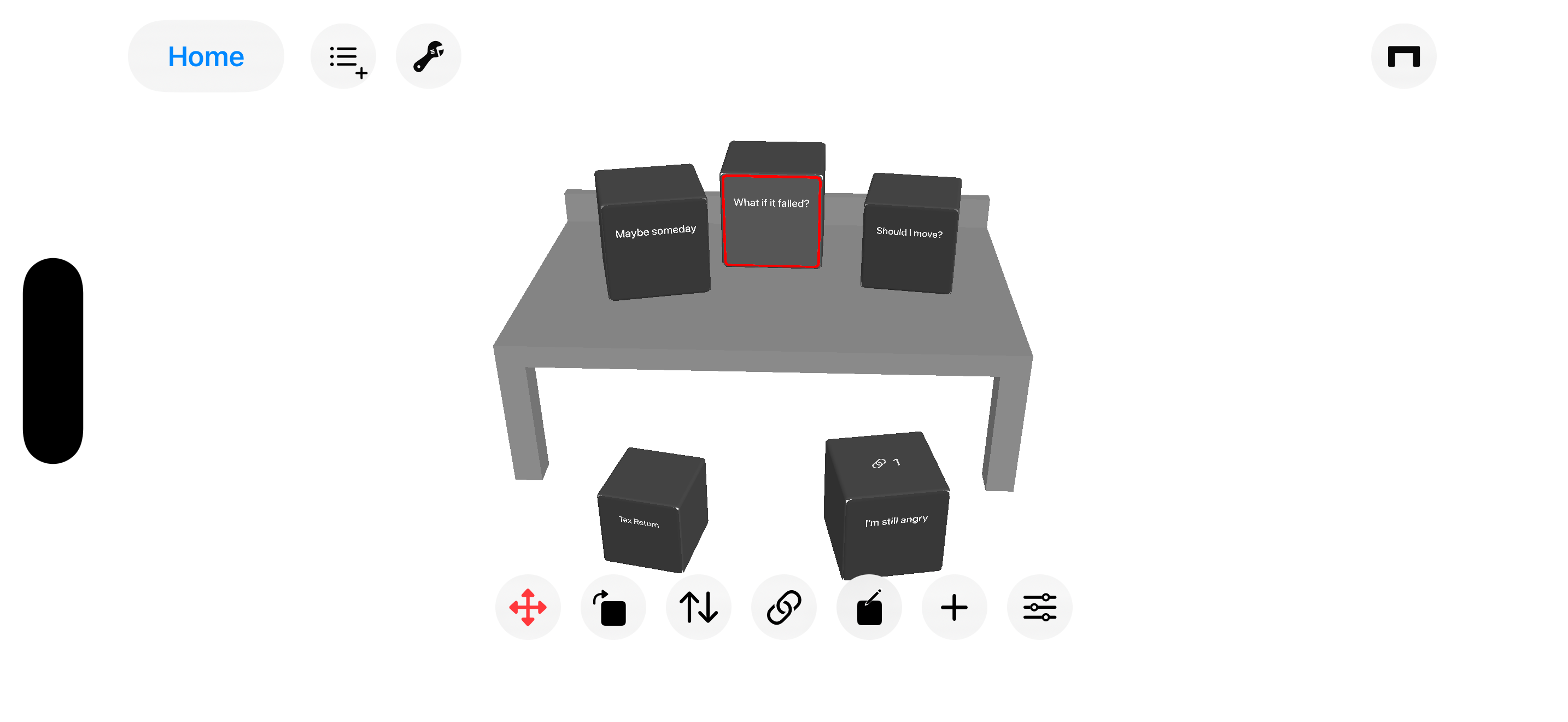
The Workbench asks:
Can this thought give you something useful to do?
If you select Yes, the Workbench asks:
What could you do?
Enter something you could do in response to the thought.
Your answer becomes a Mental Destination and the name of a new Mental Steps set.
The Adaptive Steps template then begins.
At each step, you are asked what you could do next to move toward that destination.
The idea is not to force yourself to ignore the fear.
It is to explore a possible way forward toward something the fear-based thought may have been holding you back from.
Fear-based Protective Thought
↓
What could you do?
↓
Mental Destination
↓
Adaptive Steps
↓
Move at your own pace
Sometimes you cannot tell whether a fear-based thought is pointing toward something useful.
If you select Not Sure, the Workbench can help you look at previous experiences.
This option is available only when you have eligible MindAnchor records containing both:
The Workbench shows past obstacles you expected and what actually happened when you pursued your goals.
You may discover that something you feared would stop you did not prevent you from reaching your destination.
This does not mean every fear is unfounded.
It simply gives you a chance to compare what you expected with what you experienced.
What I thought might stop me
↓
What actually happened
Sometimes you do not want to work with a fear-based thought.
You may not feel ready.
Or you may simply prefer not to engage with it.
If you select Not right now, the Workbench takes you directly to MindZoneOut.
A Zone session begins in None mode, offering a low-stimulation space where you can spend some time without needing to solve the thought.
You do not have to find an answer.
You do not have to create Mental Steps.
You can simply give your attention somewhere quieter to be.
Not every thought needs an answer right now.
The Workbench does not assume that every fear-based thought is wrong.
It does not assume that every thought must become an action.
And it does not require you to overcome anything before you are ready.
You can explore a possible action, look at your past experiences, or choose not to engage right now.
The Thought Block can remain in Thought Space regardless of which direction you choose.
A thought may try to protect you.
You decide how to respond.
Sometimes giving a thought a place is enough.
Sometimes you realize there is somewhere you might want to go from it.
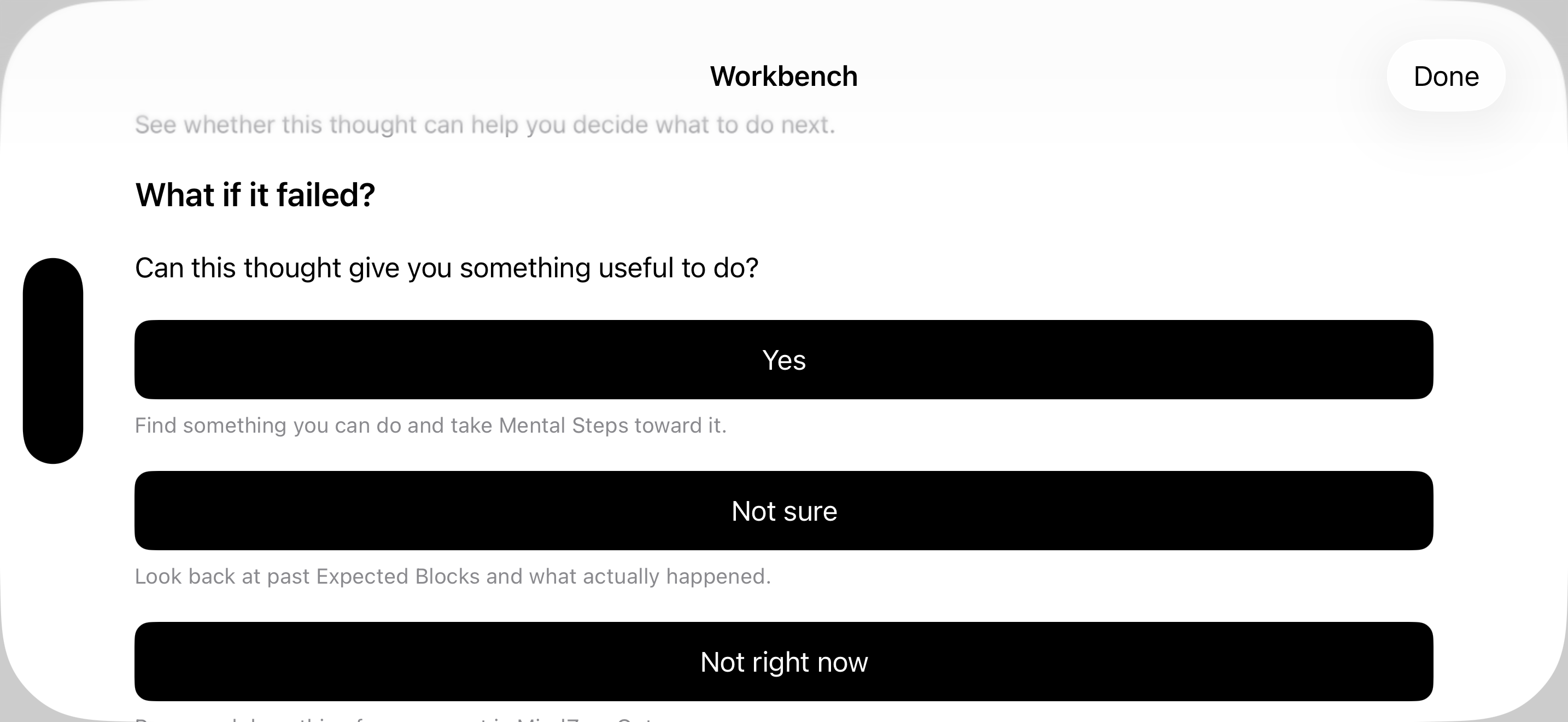
A Thought Block can be connected to one or more saved Mental Steps in MindEntry.
When Mental Steps are connected, a link indicator on the Thought Block shows how many are available.
Tap the indicator to see the Mental Steps connected to that thought.
Choose one, and MindEntry opens it so you can begin.
Thought Block
↓
Possible Mental Steps
↓
Choose one when you want
↓
Continue in MindEntry
Connecting Mental Steps does not turn the Thought Block into a task.
Nothing begins automatically.
Several possible paths can remain connected at the same time.
And you do not have to take any of them.
Possibility without pressure.
A Thought Block represents a thought.
It does not have to represent a goal.
A thought such as Family, Health, or Finance may have several possible directions.
Different Mental Steps may lead toward different Mental Destinations.
Or you may simply leave the Thought Block where it is without navigating anywhere.
The thought can remain.
The possibilities can remain.
You decide whether to move.
You finished one thing but are not ready to begin the next.
Your hands keep reaching for your phone even though you do not want more content.
Your mind feels restless, but thinking harder is not helping.
A thought keeps occupying attention, but you do not want to deal with it right now.
You want to put something aside without losing it.
You want to return to a thought on your terms rather than have it keep returning to you.
You can see several possible directions from a thought but do not want to choose one yet.
You want to move through something without needing to arrive anywhere.
Different parts of MindBackyard provide different ways for attention to move.
MindBackyard is intentionally simple.
It is not designed to excite you, reward you, or maximize the amount of time you spend inside the app.
It offers movement, space, and quiet interaction for moments when your attention wants activity without another flood of information.
Thought Space follows the same principle.
Thought Blocks do not need alerts, deadlines, completion states, or constant demands for attention.
The empty space matters too.
Sometimes the mind does not move directly from one state into another.
Work does not instantly become rest. Overload does not instantly become focus. A looping thought does not instantly become silence.
MindBackyard can sit between those states and give your attention time and space to shift.
Wandering does not always have to be aimless.
MindBackyard can also become one part of Mental Steps running in MindEntry.
A Mental Step may send you into MindBackyard for a short buffer, some movement, or a change of perspective.
When you are ready, you can return to the same active Mental Steps and continue.
Mental Steps
↓
MindBackyard
↓
Return
↓
Continue Mental Steps
In other words, MindBackyard can work in both directions.
A Thought Block can lead you into Mental Steps.
And Mental Steps can lead you into MindBackyard.
Both can become part of MINDBEBOP Mental Navigation.
Thought Space is not a 3D task manager.
There are no To Do, Doing, and Done columns.
A Thought Block does not become unfinished work merely because it exists.
Connecting Mental Steps does not create an obligation to complete them.
And the goal is not to empty Thought Space.
A thought can be present
without demanding action.
Not every thought needs to be solved. Not every moment needs to become productive. Not every movement needs a destination.
Sometimes attention simply needs somewhere gentle to move.
Sometimes a thought simply needs somewhere to be.
MindBackyard provides space for both.
The Workbench introduces a broader idea within Thought Space:
What if different structures could help you interact with thoughts in different ways?
MINDBEBOP calls this concept Thought Furniture.
Thought Furniture is not simply decorative furniture inside a virtual room.
Each piece is intended to offer a different way of interacting with a thought.
The Workbench is an example of Thought Furniture: a structure designed to change how you interact with a thought.
Rather than simply storing a Thought Block, the Workbench offers different responses to Fear-based Protective Thoughts.
Future Thought Furniture may offer entirely different ways of interacting with thoughts.
Some interactions might lead toward Mental Steps.
Others might simply change how you relate to a thought without requiring you to do anything about it.
The question is not:
What furniture should we put in Thought Space?
The question is:
What relationship with a thought
could this interaction make possible?
Thought Furniture is an ongoing experiment.
The Workbench is a starting point, not the final destination.
Learn more about Thought Space, Spatial Mental Shelving, and Thought Furniture.
MindBackyard is free to use.
There are no paid feature gates.
Optional Tip Jars are available if you would like to support continued MINDBEBOP development.
Tips do not unlock additional features.
MindBackyard is designed around local, personal interaction with your own Thought Space.
Your Thought Space is yours.
Copyright © 2026 MINDBEBOP — All rights reserved.