 MINDBEBOP
Mental Background OS
MINDBEBOP
Mental Background OS
Not life optimization. Cognitive reset.
Small step-by-step resets for moments when the mind gets overloaded, looping, frozen, or stuck.
A reset method alone can still create friction if you have to remember the steps. A CogniHack runs through MindEntry, so the sequence is held for you.
Last Updated: 2026-06-02
Most “life hacks” ask you to plan better, think harder, organize more, or optimize yourself.
But when your mind is overloaded, looping, frozen, or stuck, more thinking usually makes things worse.
In those moments, you may not need advice. You may just need the next step placed in front of you.
A CogniHack is a cognitive reset sequence run through MindEntry without using other MINDBEBOP apps as steps.
It may guide sensory resets, tiny physical actions, grounding methods, or Stateful steps such as Your Situation and Your Step.
If the sequence opens another MINDBEBOP app such as MindFlipOut, MindShoutOut, MindZoneOut, MindBackOut, MindEaseOut, or MindBackyard, it becomes a Recipe.
MindEntry holds the sequence so you do not have to remember, organize, or decide what comes next.
Just follow the next visible step.
Some CogniHacks are Stateful Recipes.
Instead of requiring every detail in advance, they can ask what matters right now while the sequence is running.
The recipe holds the structure. You provide the current situation.
That answer can be carried through the rest of the sequence.
A Stateful CogniHack may ask for:
This keeps the reset sequence out of your head while still letting it adapt to the moment you are actually in.
The Situation: Your brain is buffering. Anxiety, loop thoughts, or an ADHD freeze have overloaded your working memory, leaving your mind stuck inside itself.
The 5-4-3-2-1 grounding method is already known as a sensory reset. But when you are overloaded, remembering the sequence can become another task.
Running it through MindEntry turns it into a CogniHack: one visible step at a time, with no need to hold the whole sequence in your head.
Run this as a CogniHack:
Import this recipe into MindEntry Recipe Runner. One screen, one step, no sequence to remember.
Method 1: Scan to Import
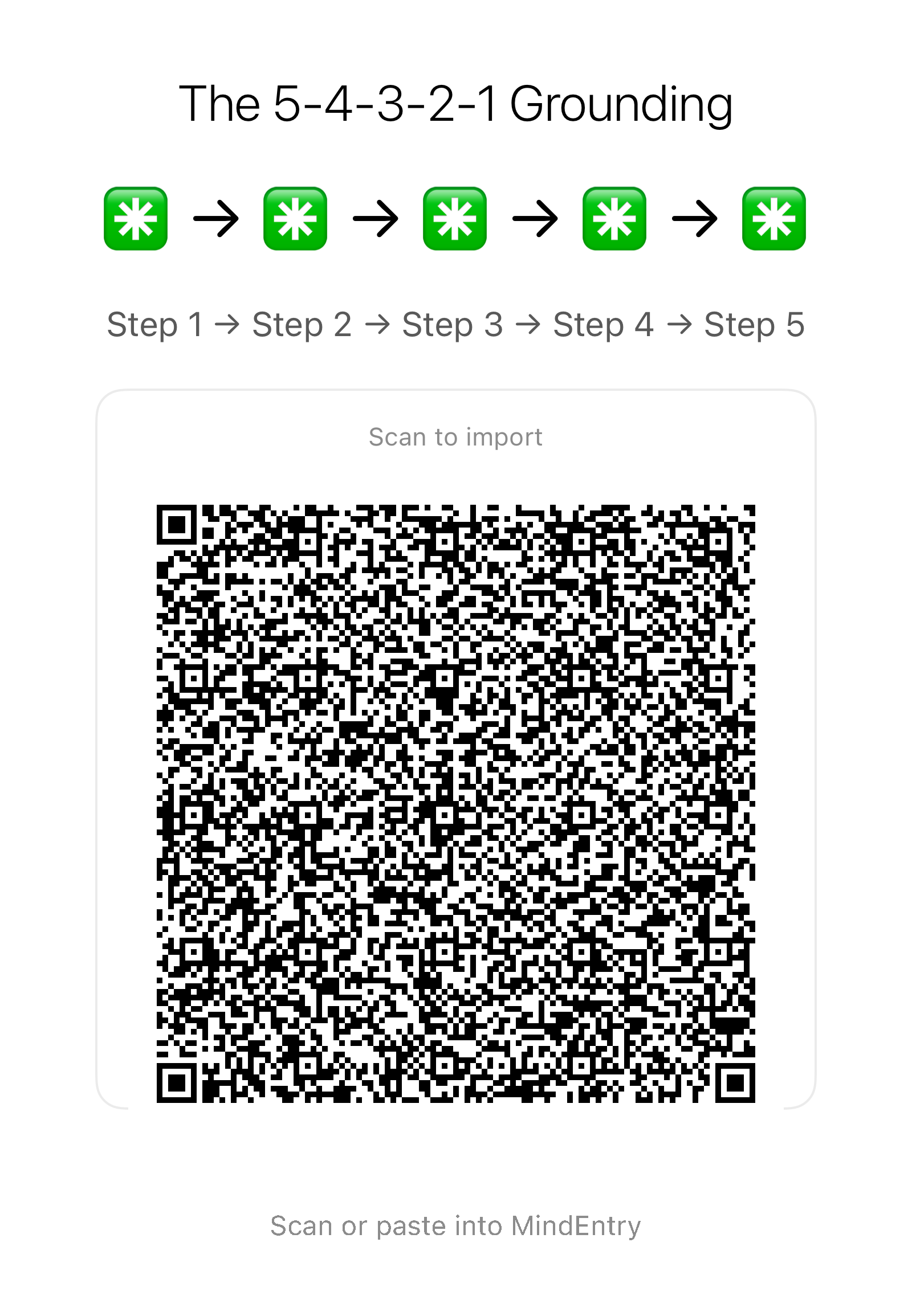
Method 2: Copy & Paste Code into MindEntry
The Situation: You know what needs to be done, but you cannot begin. The task feels too large, too complicated, or too heavy. Instead of starting, you find yourself scrolling, organizing, researching, or thinking about doing the task.
The 2-Minute Rule is often used to break procrastination. But when you are frozen, figuring out how to shrink a task can become another task.
Running it through MindEntry turns it into a Stateful CogniHack. The structure stays the same, but the current task is supplied during the run.
Run this as a CogniHack:
Import this recipe into MindEntry Recipe Runner. One screen, one step, no sequence to remember.
Method 1: Scan to Import
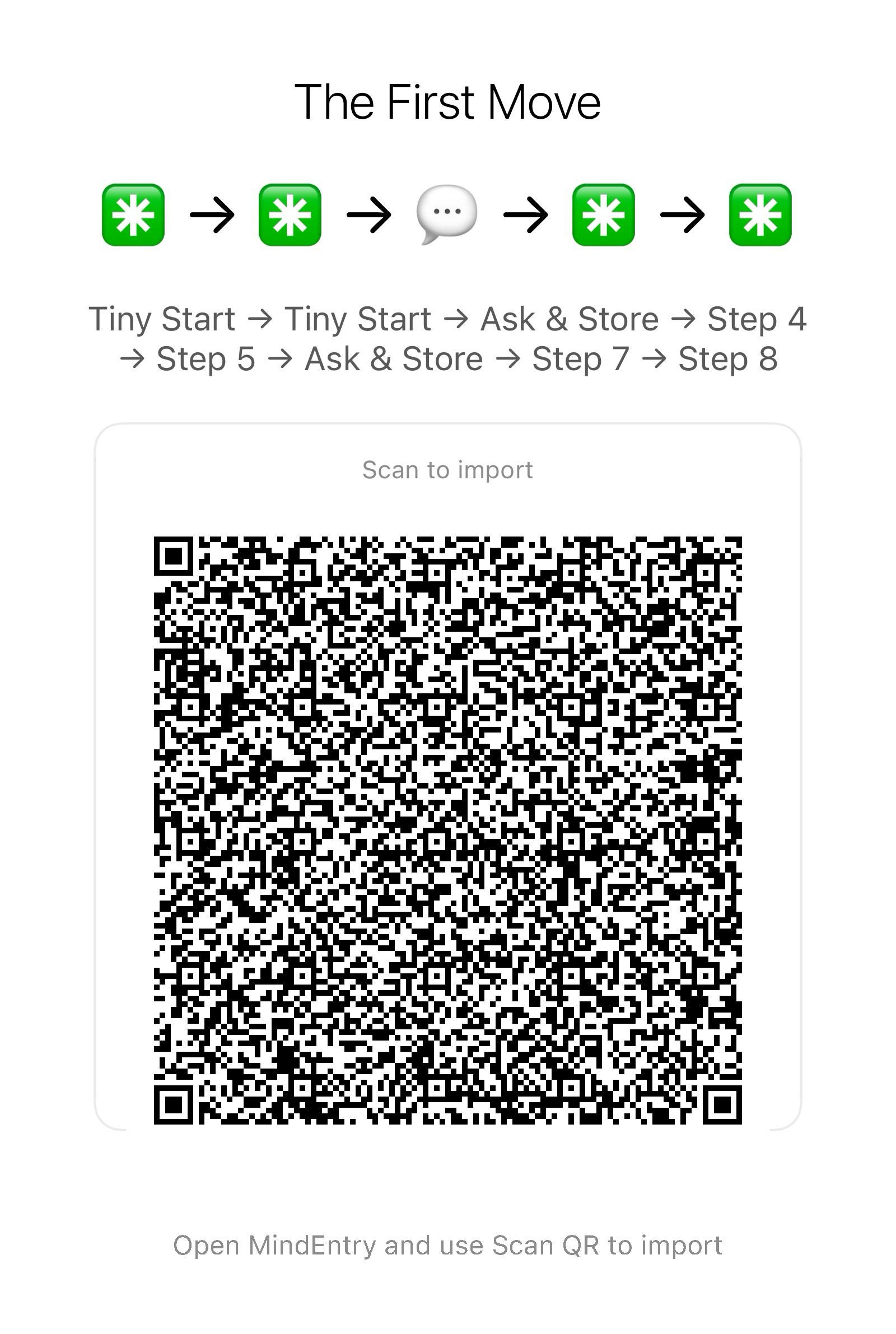
Method 2: Copy & Paste Code into MindEntry
A reset method can still be hard to use when your mind is already overloaded.
If you have to remember the order, hold the steps in your head, or decide what comes next, the method can create more cognitive friction.
MindEntry removes that friction by holding the sequence for you.
You only follow the next visible step.
Copyright © 2026 MINDBEBOP — All rights reserved.